

Screen mesh – also known as bolting cloth – is the foundational fabric stretched across the printing frame and is the single most critical component in the screen printing process. Made from high-tensile monofilament polyester (and in precision applications, stainless steel), the mesh acts as a controlled stencil carrier, allowing ink to pass through its open areas onto the substrate while the hardened emulsion blocks the rest. The quality of a mesh directly determines ink deposit thickness, detail resolution, print sharpness, and screen longevity.
The mesh is characterized by its mesh count – the number of threads per inch (TPI) or per centimetre. This count governs how much ink is deposited and how fine a detail can be reproduced:
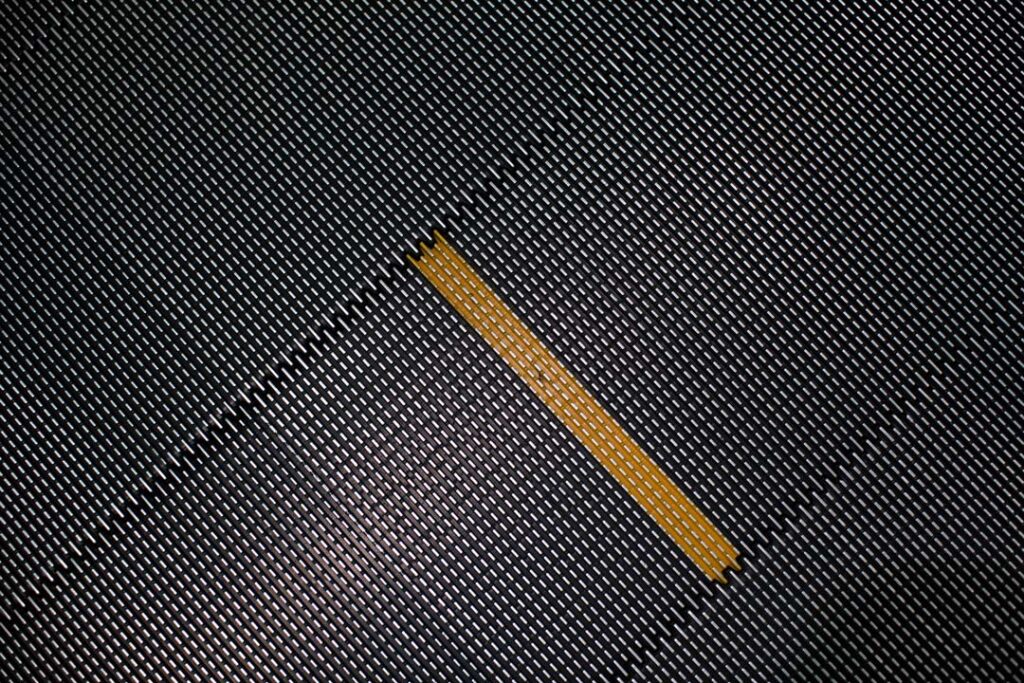
We keep cloth from 25-500 mesh count.
Polyester mesh is the industry standard for textile screen printing due to its exceptional tensile strength, chemical resistance, elastic memory and dimensional stability under tension. Low-elongation polyester variants are favoured in high-precision applications as they maintain consistent tension over long print runs, ensuring accurate registration. Stainless steel bolting cloth is reserved for highly demanding industrial and electronics printing where zero stretch is required. Selecting the correct mesh count for each job-based on substrate type, ink viscosity and design complexity – is a skill that defines the quality of the final print.